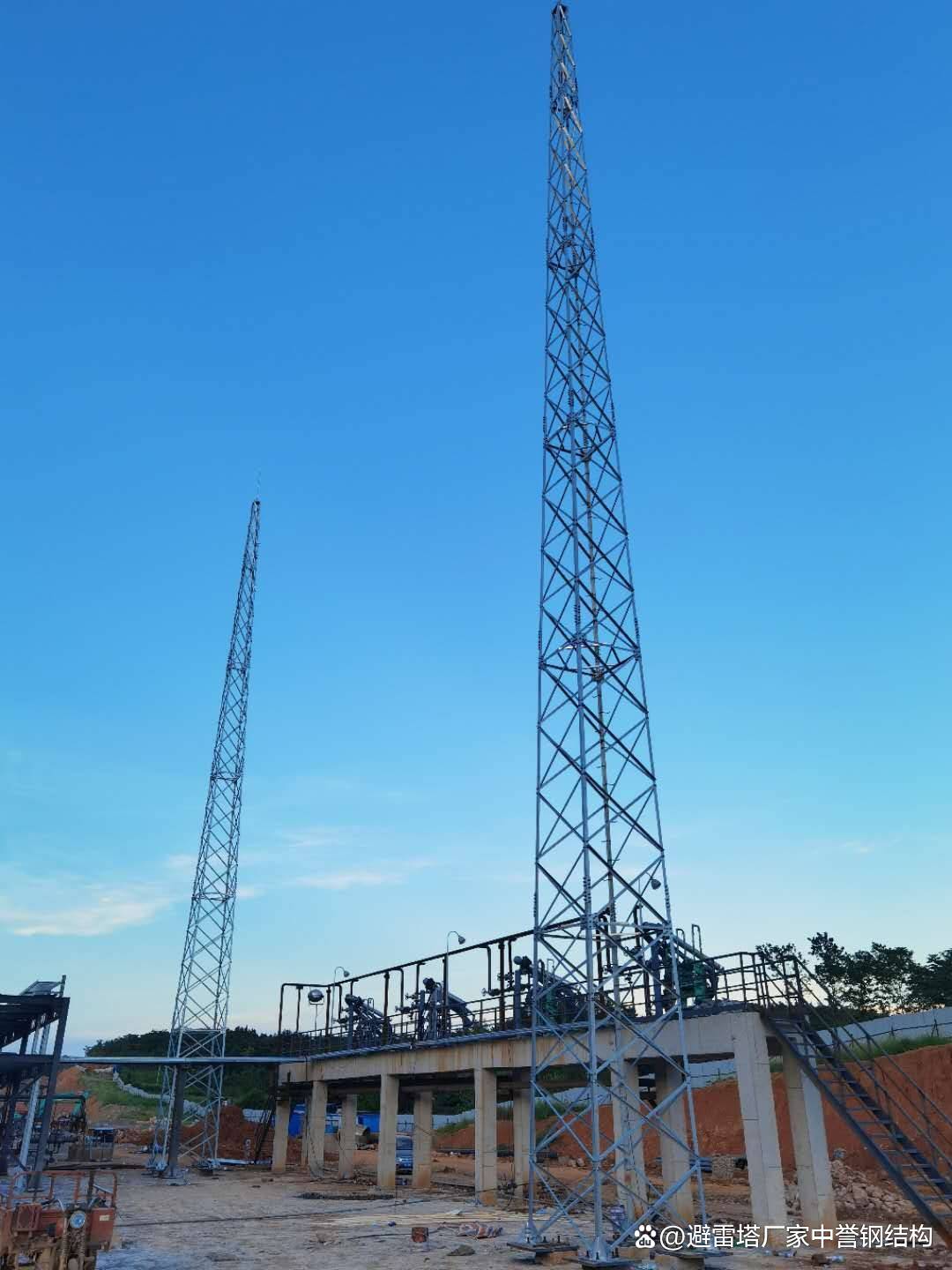
What Does a Lightning Tower Do?
A lightning tower is a tall steel structure for direct lightning-strike protection: an air terminal (lightning rod) at the top, together with down conductors and an earthing system, channels lightning current safely into the ground, protecting buildings, storage tanks and equipment in the surrounding area.
The self-supporting steel tube lightning towers built by Hebei Guangjia Tower feature a simple structure and small footprint — widely used at fuel depots, chemical parks, explosives magazines, substations, solar farms and base stations with high lightning protection requirements.
Types & Protection Range
Common types include self-supporting tube towers, angle steel towers, gantry-mounted lightning masts and rooftop air terminals. Tower height and position are determined by the rolling sphere method according to the protected object and protection level, coordinated with the earthing network to form a complete lightning protection system.
Fabrication & Installation
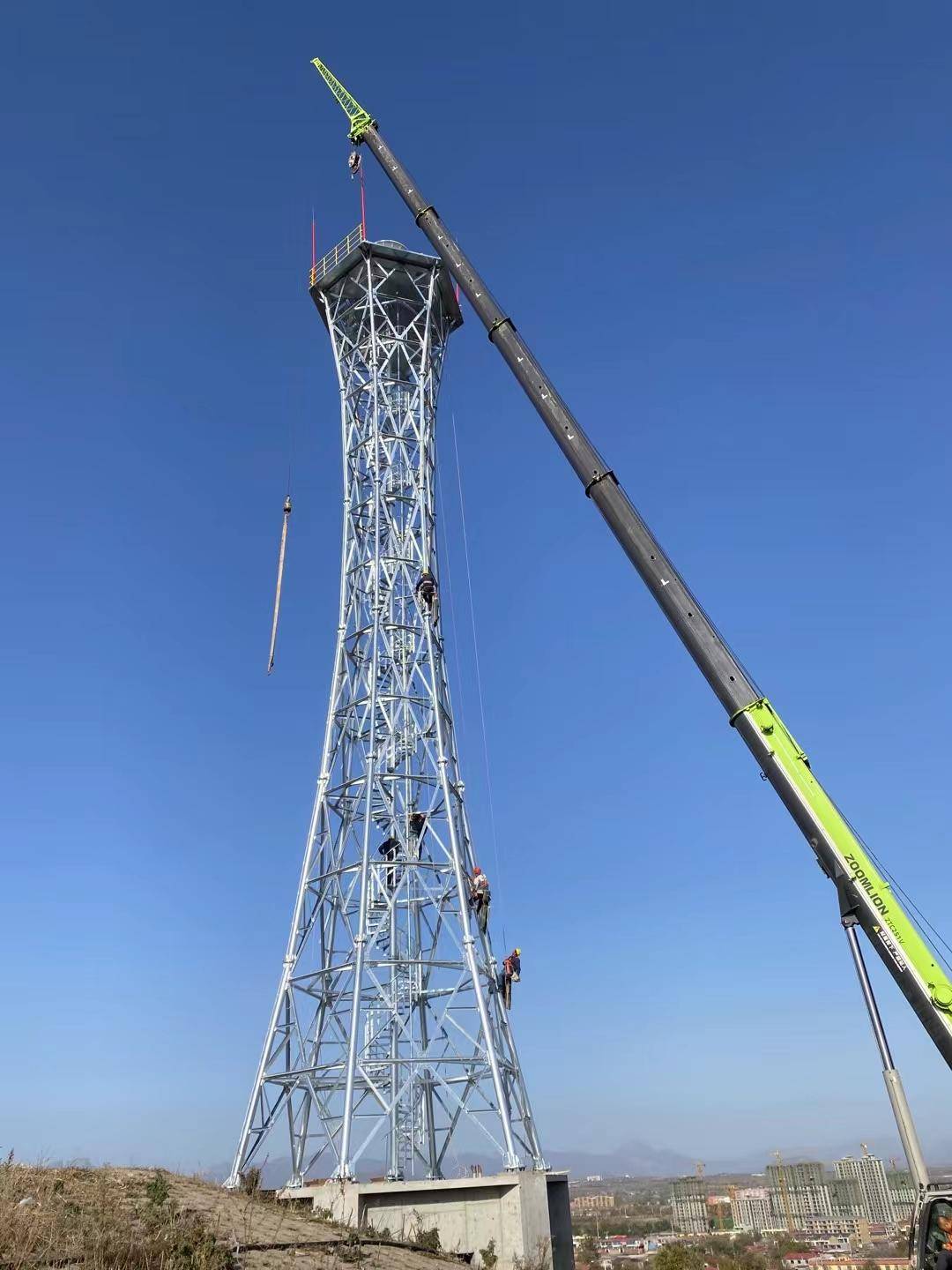
The tower is hot-dip galvanized, transported in sections and erected on site; earth resistance testing and down-conductor connection are completed during installation to ensure the system works as a whole.
- Structure
- Self-supporting steel tube / angle tower
- Function
- Direct lightning-strike protection
- Design Basis
- Rolling sphere method
- Corrosion Protection
- Hot-dip galvanized
- Accessories
- Air terminal · down conductor · earthing
- Sites
- Fuel · chemical · substation · solar
Applications
Related Products
FAQ
How much does a lightning tower cost?
Priced by height, structure type (self-supporting tube / lattice) and whether earthing is included; common heights 15–40 m. Provide the installation location and protected object for a quotation.
How tall should a plant lightning tower be?
Per rolling sphere calculation: 25–40 m for fuel depots and gas tanks in flammable/explosive areas, 15–25 m for general plant areas — final size based on site survey and calculation.
Is earthing included?
Optional. The tower can come with earth electrodes and down conductors; earth resistance is built to code (generally ≤10 Ω, ≤4 Ω for flammable/explosive areas) and accepted as a complete system.
Any special requirements for chemical parks?
The protection range is determined by the hazardous-zone classification and rolling sphere method; the tower keeps a safe distance from protected objects, and earthing follows the standards for flammable and explosive sites.
Need a solution & quotation for Lightning Protection Tower?
Build-to-drawing and custom design both supported — email us your project location, scale and schedule.